Your Complete Guide to Tennis Scores
Follow live tennis scores today, understand the scoring system, and stay connected with every major tournament around the world — all from one trusted destination.
Welcome to Tennis Scores — Where Every Point Matters
Tennis remains one of the most captivating individual sports on the planet. Whether you are watching a Grand Slam final on a Sunday afternoon, following a mid-week WTA event on your phone, or refreshing your browser for live tennis scores during a lunch break, the thrill of each rally depends on one thing — knowing exactly where the match stands. That is precisely where tennis scores become essential to every fan, analyst, and casual observer.
This website was created with a clear purpose: to serve as a reliable, easy-to-navigate resource where visitors can learn about tennis scores, find results from current and past tournaments, and genuinely understand the unique structure behind the sport's point system. If you have ever found yourself asking how tennis scores work or why the numbering sequence jumps from love to fifteen, thirty, and then forty, you are in the right place.
From the Australian Open in Melbourne to Wimbledon in London, from the clay courts of Roland Garros to the hard courts of the US Open, tennis captivates audiences worldwide. Millions of fans search for tennis scores today across dozens of tournaments held throughout the year. This guide walks you through every aspect of the scoring system while also serving as your gateway to live results and standings across both men's and women's professional tours.
How Do Tennis Scores Work — A Complete Breakdown
One of the most frequently asked questions among new viewers is simple yet important: how do tennis scores work? Unlike most popular sports where sequential numbering determines progress, tennis uses a layered structure that includes points, games, and sets. Each layer feeds into the next, creating a rhythm that rewards consistency, mental strength, and tactical brilliance.
The Three Layers of Scoring in Tennis
To understand tennis scores, you need to appreciate the three-tier system that defines every match played on the professional tour. The first layer involves individual points within a game. The second layer involves accumulating enough games to claim a set. The third layer involves winning enough sets to secure the match. Let us look at each layer in detail.
Points Within a Game
Each game starts at love, which represents zero. The first point scored by a player moves them to fifteen. The second point takes them to thirty. The third point brings them to forty. If a player wins the next point from forty, that player claims the game — provided the opponent has not also reached forty. When both players reach forty, the situation is called deuce, and the scoring enters a brief sudden-pressure phase that many find to be among the most exciting moments in a match.
| Points Won | Score Called | Description |
|---|---|---|
| 0 | Love | Starting position |
| 1 | 15 | First point scored |
| 2 | 30 | Second point scored |
| 3 | 40 | Third point scored |
| 4 | Game | Game won (if leading) |
Games Within a Set
To win a set, a player must reach six games with at least a two-game lead over the opponent. If the set reaches six games apiece, a tiebreak is generally played to determine the winner. The tiebreak itself uses regular sequential numbering — one, two, three, and so on — which can feel like a welcome change of pace for viewers still getting familiar with how to read tennis scores.
Sets Within a Match
In most professional tennis, men's matches at Grand Slam events are best-of-five sets, while women's matches and the majority of other professional events for both genders are best-of-three sets. This distinction is worth noting because it affects strategy, endurance, and the overall drama of a match. Knowing this context helps when you follow live tennis scores and want to assess who might hold the advantage.
Why Are Tennis Scores 15, 30, and 40?
This particular question has fascinated sports enthusiasts and historians for centuries. Why are tennis scores so weird compared to other sports? The honest answer involves a blend of confirmed history and educated speculation, as the origins of the current system reach back many hundreds of years.
The most widely accepted explanation traces the numbering to medieval France, where early forms of tennis were played by nobility. One popular theory suggests the scoring related to the face of a clock, with each point moving the hand a quarter turn — from fifteen to thirty to forty-five. Over time, forty-five was shortened to forty for ease of calling during play. While no single historical document confirms this theory beyond doubt, it remains the most commonly cited explanation for why tennis uses this seemingly unusual progression.
Another theory suggests that the numbering related to the monetary stakes placed on early matches, with each point representing an increment of currency. Regardless of which explanation resonates with you personally, the practical result is the same — once you learn what the scores in tennis represent, they become second nature very quickly.
If you have recently noticed people discussing the topic across social media, you might have wondered why is tennis scores trending. Interest in the sport's scoring system tends to spike during Grand Slam tournaments when millions of new viewers tune in and encounter the system for the first time. It is also worth noting that viral moments, controversial line calls, and dramatic tiebreaks regularly prompt fresh waves of curiosity about how tennis scoring actually functions.

How to Read Tennis Scores with Confidence
For anyone new to the sport, learning how to read tennis scores is the single most important step toward enjoying matches more fully. A scoreboard at any professional event will display the players' names, the number of sets each has won, the current game count within the active set, and the points within the current game. Once you understand this hierarchy, reading the board becomes effortless.
A Practical Example for New Fans
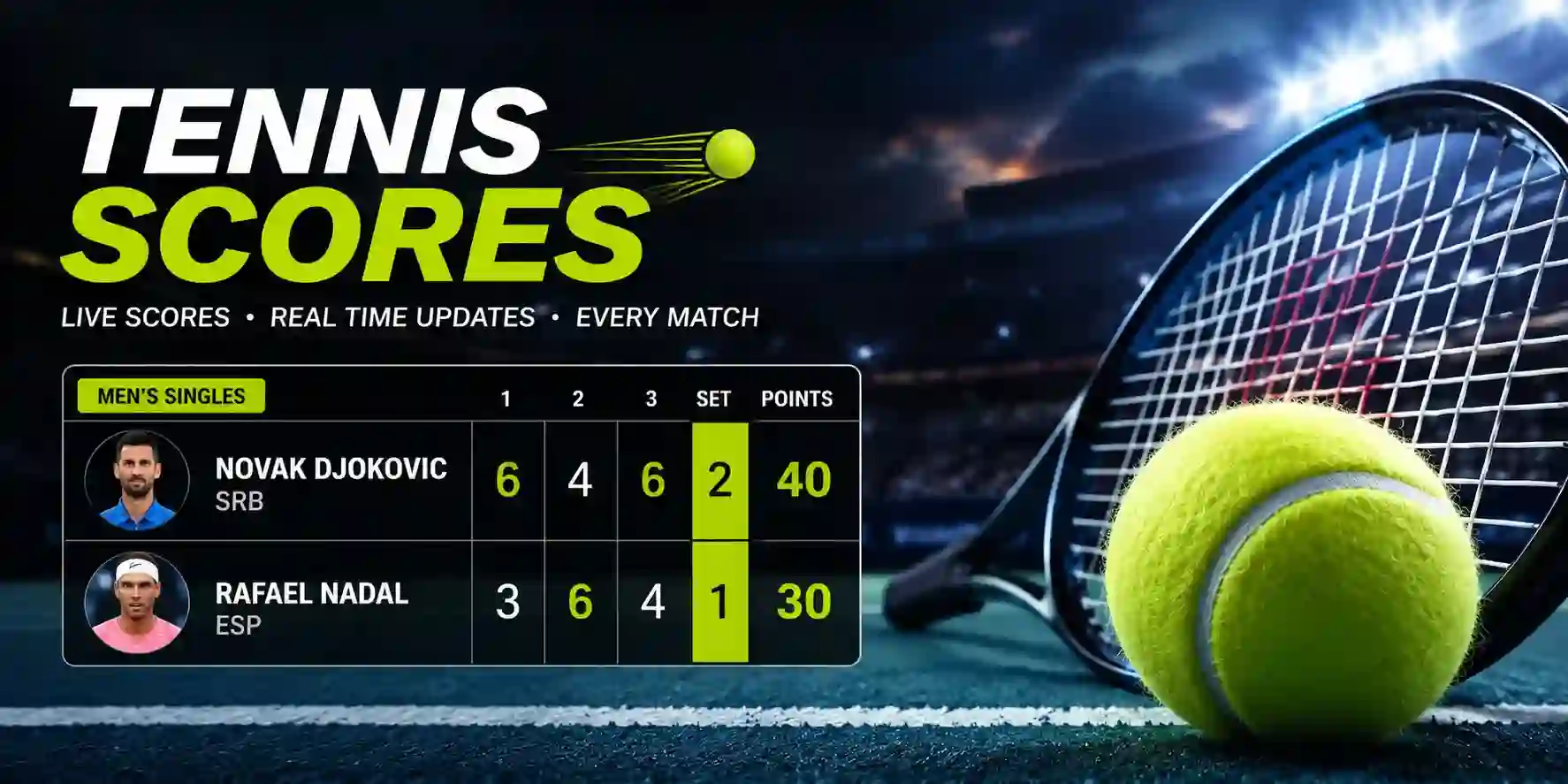
Imagine you see a scoreboard that reads Player A leading 6-4, 3-2, with a point score of 30-15. Here is what that tells you: Player A won the first set by six games to four. In the second set, Player A leads by three games to two. Within the current game being played, Player A has scored two points (thirty) while Player B has scored one point (fifteen). With this simple framework, you can follow any match in the world.
When both players win six games each in a set, the scoreboard displays 6-6, and a tiebreak commences. Tiebreak scores are shown differently — usually as simple numbers such as 5-3 or 7-6 — which helps distinguish them from regular game scores. Understanding this difference is a common stumbling block for newcomers, so if you have been asking how do you read tennis scores during a tiebreak, simply look for the number that reaches seven first, with at least a two-point margin.
What Do Tennis Scores Mean in Context?
Knowing the numbers is only part of the picture. What do tennis scores mean in terms of match dynamics? A player who leads by a set and a break of serve is in a commanding position. Conversely, a player who has lost the first set but holds a break advantage early in the second set still has every chance to turn the match around. Understanding this context transforms tennis from a sequence of points into a compelling narrative with momentum shifts, tactical adjustments, and psychological battles unfolding in real time.
What You Will Find on This Website
This site is designed to be your comprehensive resource for everything related to tennis scores. Whether you are a devoted fan who watches every match or a curious newcomer exploring the sport for the first time, the content here is organised to meet your needs.
Live Score Updates
Stay informed with real-time results across ATP, WTA, and Grand Slam events. Find live tennis scores today without the clutter of unnecessary distractions.
Tournament Coverage
Follow results from every corner of the tennis world — from the Australian Open and US Open through to Wimbledon, the Miami Open, and hundreds of tour events.
Scoring Guides
Comprehensive explanations that help you understand how scores work in tennis. Clear, jargon-free language that makes the sport accessible to everyone.
Women's Tennis
Dedicated coverage for WTA tennis scores and women's professional events. Results from every tier of the women's tour are treated with equal importance.
Men's Tennis
Comprehensive access to men's tennis scores from every level of the ATP tour, including Challengers, Masters events, and the four Grand Slams.
Table Tennis
Looking for table tennis scores as well? This site also recognises the growing interest in table tennis and provides helpful pointers for following that sport.
Following Scores Across the Biggest Tournaments
The professional tennis calendar spans nearly the entire year, and understanding when and where the biggest events take place enhances the experience of following tennis scores throughout each season.
Grand Slam Tournaments
The four Grand Slam tournaments represent the pinnacle of professional tennis. The Australian Open kicks off the season in January, played on hard courts in Melbourne. The French Open follows in late May and early June on the red clay of Paris. Wimbledon, the most prestigious tournament in the sport, takes place on grass courts in London during late June and July. The US Open rounds out the Grand Slam calendar in late August and September on the hard courts of New York.
Each of these events generates enormous interest in live tennis scores. When Roger Federer was chasing history at Wimbledon, when Serena Williams was dominating the US Open, and when current stars deliver breathtaking performances at the Australian Open, fans around the globe refresh their screens for the latest updates. Wimbledon tennis scores and US Open tennis scores consistently rank among the most searched sporting terms during their respective fortnights.
Masters and Premier Events
Beyond the Grand Slams, events like the Miami Open attract world-class fields and generate substantial interest. Miami Open tennis scores and miami tennis scores become popular search terms each spring as the tennis world descends on Florida for two weeks of compelling competition. The tournament serves as a key indicator of form heading into the clay court season and regularly produces memorable matches across both the men's and women's draws.
Other significant events on the tour include Indian Wells, Madrid, Rome, and the year-end championships for both genders. Each of these events contributes to a constant stream of results and standings that dedicated fans want to access quickly and easily.

Coverage Across Men's and Women's Professional Tennis
One of the defining commitments of this website is providing equal visibility and depth of coverage for both sides of the professional tour. Tennis scores for women's events deserve the same attention and care as results from the men's tour, and that principle guides every piece of content published here.
Women's Tennis Scores and the WTA Tour
The Women's Tennis Association oversees a global tour that includes more than fifty events annually. WTA tennis scores reflect an incredibly competitive landscape where established champions and emerging talent compete side by side. From the power-based game of current number ones to the tactical finesse of experienced veterans, women's tennis offers a rich variety of playing styles and compelling rivalries.
Interest in women's tennis scores has grown significantly in recent years, driven by increased media coverage, equal prize money at Grand Slams, and a new generation of players bringing fresh energy to the sport. Whether you follow the tour closely or check results occasionally, this website ensures that women tennis scores are easy to find, clearly presented, and thoroughly contextualised.
Men's Tennis Scores and the ATP Tour
The Association of Tennis Professionals governs the men's professional circuit, which includes nine Masters 1000 events, the ATP Finals, and hundreds of additional tournaments at various tiers. Mens tennis scores from these events track the journeys of the sport's biggest names and most exciting prospects alike.
The men's tour has undergone a fascinating transition in recent years. A generation of dominant champions has gradually given way to a vibrant group of younger players who are reshaping the competitive landscape. Following men's tennis scores across the full calendar reveals patterns of form, fitness, and surface preference that make the sport endlessly interesting to analyse.
Tennis Scores Explained — Special Situations
Beyond the basic structure of points, games, and sets, several special situations arise during matches that can initially confuse newcomers. Having tennis scores explained in the context of these scenarios helps you follow even the most complex matches without hesitation.
Understanding Deuce and Advantage
When both players reach forty in a game, the umpire calls deuce. From deuce, the next point gives one player the advantage. If the player with advantage wins the following point, they claim the game. If they lose it, the score returns to deuce. This cycle can repeat multiple times, creating extraordinary tension in closely contested games. Some of the greatest moments in tennis history have emerged from extended deuce games where neither player was willing to yield.
The Tiebreak System
Tiebreaks were introduced to prevent sets from extending indefinitely. In a standard tiebreak at six games all, the first player to reach seven points with a two-point lead wins the set. Grand Slam tournaments have recently adopted various final-set tiebreak formats — some at 6-6, others as a first-to-ten super tiebreak at 6-6 in the deciding set. These variations are worth knowing when you follow live tennis scores from different tournaments.
Retirement and Walkover
Occasionally, a match ends before one player reaches the required number of sets. A retirement occurs when a player withdraws during a match due to injury or illness. A walkover occurs when a player cannot start the match at all. In both cases, the tennis scores recorded reflect the state of play at the time the match ended, and the remaining player advances to the next round.
Why People Are Searching for Tennis Scores Right Now
If you have noticed discussions online and wondered why is tennis scores trending right now, you are not alone. Several factors contribute to periodic surges in interest around this topic, and understanding them helps explain the broader cultural position of tennis in today's sporting landscape.
Grand Slam Season Drives Interest
The most obvious driver of search interest is the Grand Slam calendar. When the Australian Open, French Open, Wimbledon, or US Open is underway, millions of people who may not follow tennis regularly tune in to watch. Many of these viewers encounter the scoring system for the first time and naturally search for explanations. This cycle repeats four times each year and consistently brings fresh audiences to the sport.
Social Media and Viral Moments
A spectacular rally, a controversial line call, or an emotional victory speech can go viral within minutes. When these moments spread across social media platforms, they often prompt viewers to search for context — including understanding the score of the match in question. This organic curiosity drives significant traffic to resources that explain how is tennis scored and what specific match results mean.
New Fans Discovering the Sport
Tennis continues to attract new fans worldwide, particularly in regions where the sport is experiencing growth. As these audiences discover professional tennis for the first time, their initial questions are often about the scoring system. Searches for how to understand tennis scores and how does tennis scoring work reflect genuine curiosity from people who want to engage more deeply with the sport.
The visibility of tennis across streaming platforms, highlights on social media, and coverage in mainstream news outlets ensures that the sport regularly reaches audiences beyond its traditional fan base. Each new viewer who learns the scoring system becomes a potential lifelong fan, and that growth is something this website is proud to support.
A Note on Table Tennis Scores
While this website focuses primarily on lawn tennis as played on the professional circuit, the topic of table tennis scores deserves acknowledgment. Table tennis uses a simpler scoring system — matches are typically best-of-five or best-of-seven games, with each game played to eleven points. A player must win by two clear points.
The scoring in table tennis is more intuitive for newcomers because it follows standard sequential numbering. However, the speed and skill involved in professional table tennis create their own unique excitement. Many tennis fans also follow table tennis, particularly during the Olympic Games when both sports receive extensive coverage.
If you arrived at this site looking for table tennis results, we appreciate your visit and hope the tennis content here captures your interest as well. The world of racquet sports is vast and interconnected, and understanding the scoring system of each discipline enriches the experience of watching all of them.
Our Commitment to Accurate and Accessible Coverage
Every piece of content on this website is created with care and attention to accuracy. The world of professional tennis generates an enormous volume of results, statistics, and narratives each week, and our goal is to present that information in a way that is both comprehensive and approachable.
Whether you are searching for today's results, want to understand how scoring works in tennis, or are simply curious about why the numbering system looks the way it does, this site is here to help. We cover men's and women's professional tennis with equal dedication, follow Grand Slam events and smaller tour stops with the same level of interest, and strive to make the sport more accessible to everyone who visits.
Tennis is a sport built on tradition, precision, and fair competition. These values guide our approach to content creation as well. No shortcuts, no filler, and no compromise on quality. We believe that every fan — whether they have followed the sport for decades or discovered it yesterday — deserves a resource that respects their intelligence and rewards their curiosity.
We invite you to explore the rest of the site, check back regularly for updated results and articles, and share this resource with anyone who might benefit from it. Tennis is a sport that grows through shared enthusiasm, and every new fan who learns to read and appreciate the scoring system becomes part of a global community that celebrates one of the most beautiful games ever devised.
Meet the Person Behind Tennis Scores
This website is a personal project driven by a genuine love for tennis and a desire to make the sport more accessible to fans everywhere. Every article, every guide, and every result update reflects a personal commitment to quality and accuracy. Thank you for visiting, and I hope this site enhances your enjoyment of this wonderful sport.